
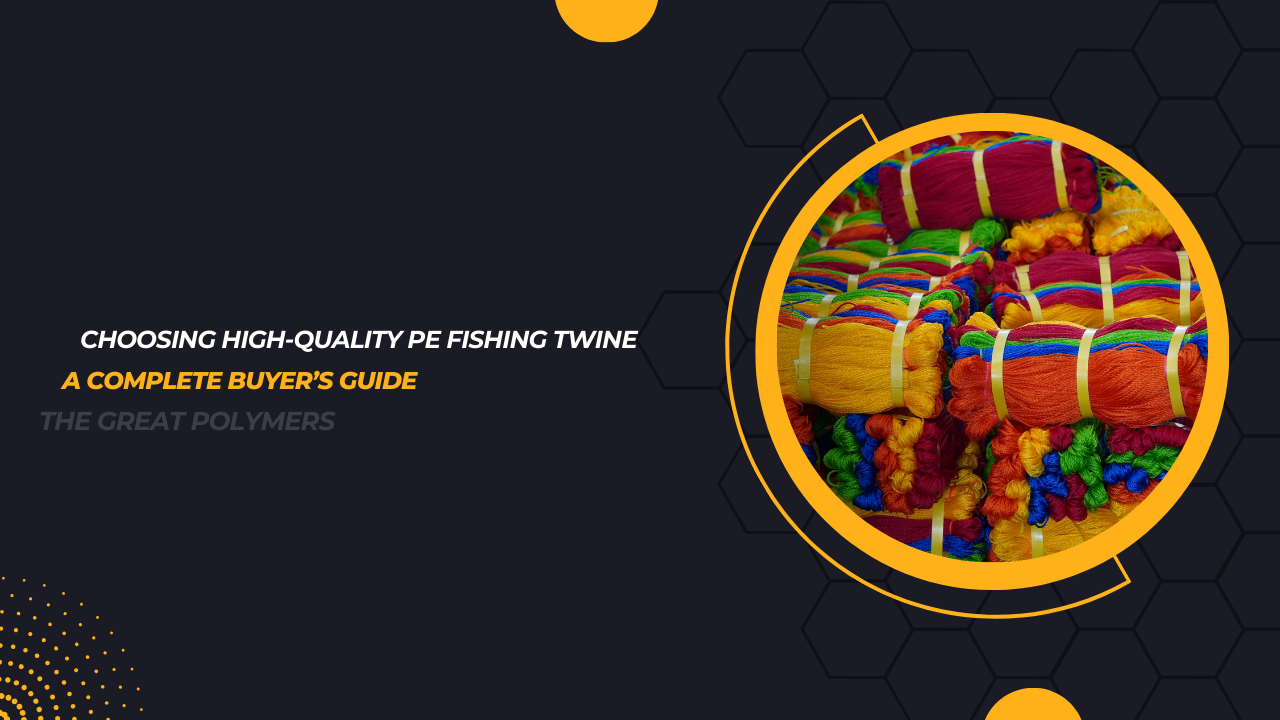
Fishing is more than just a livelihood—it’s a precision-driven activity that depends heavily on the strength and reliability of your equipment. One of the most essential yet often overlooked components in fishing operations is PE (Polyethylene) fishing twine. Whether used for net making, repairing fishing nets, aquaculture setups, or commercial marine operations, selecting high-quality PE fishing twine directly impacts durability, performance, and overall cost-effectiveness.
In this complete buyer’s guide, we’ll walk you through everything you need to know about choosing the right PE fishing twine for your needs.
What Is PE Fishing Twine?
PE fishing twine is made from polyethylene fibers, known for their high strength-to-weight ratio, flexibility, and resistance to water and chemicals. Unlike natural fiber twines, PE twine does not rot, absorb water, or weaken easily in harsh marine conditions.
It is widely used in:
- Fishing net manufacturing
- Net mending and repairs
- Aquaculture cages
- Trawl and gill nets
- Longline fishing systems
- Marine and coastal applications
Why Quality Matters in PE Fishing Twine
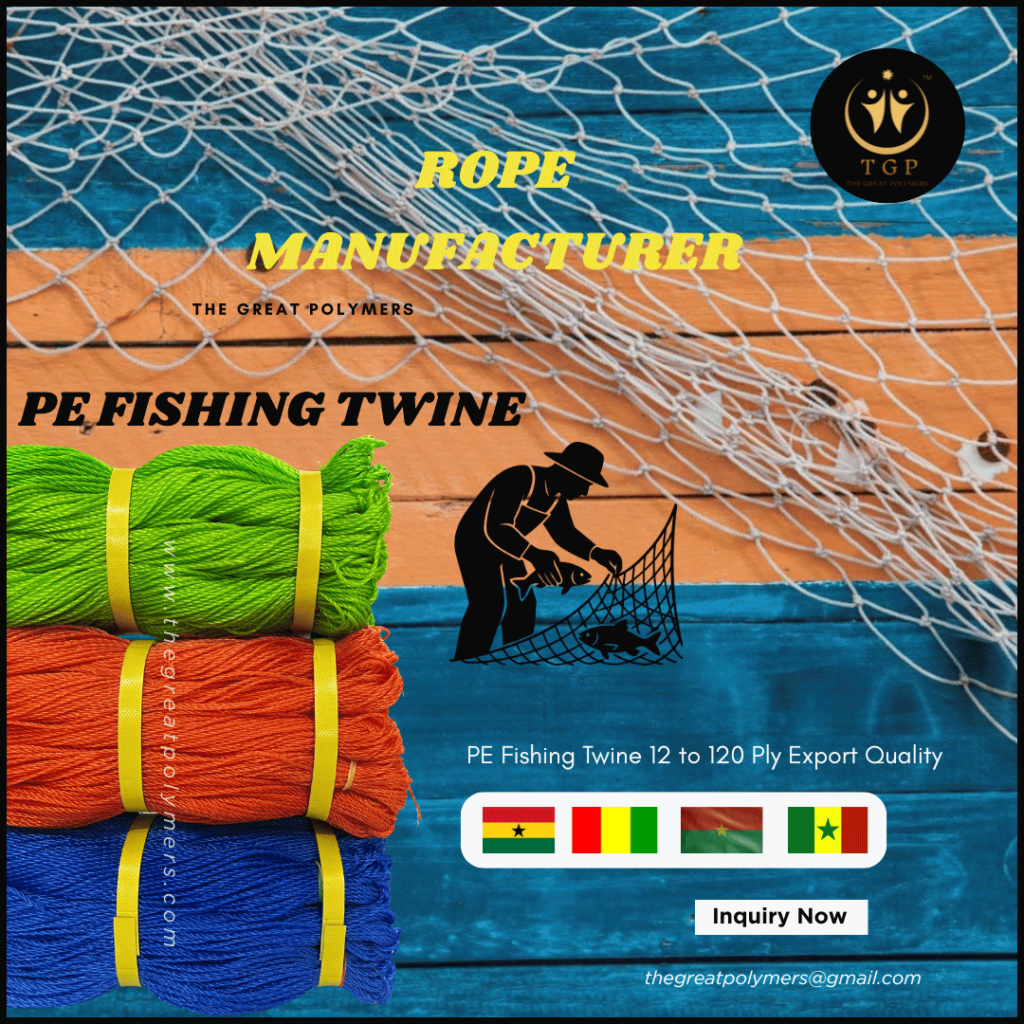
Choosing low-grade twine may reduce initial costs but often leads to:
- Frequent net breakage
- Reduced catch efficiency
- Higher maintenance costs
- Safety risks in rough sea conditions
High-quality PE fishing twine ensures:
- Superior tensile strength
- Better knot security
- UV resistance
- Long-lasting performance in saltwater
Investing in premium-grade twine reduces long-term expenses and improves operational efficiency.
Key Factors to Consider When Choosing PE Fishing Twine
1. Twine Thickness (Denier or Diameter)
The thickness of PE fishing twine determines its strength and application suitability.
- Thin Twine – Suitable for lightweight nets and small fish.
- Medium Thickness – Ideal for general fishing applications.
- Heavy-Duty Twine – Best for large commercial fishing nets and deep-sea use.
Choose thickness based on target fish species and water conditions.
2. Tensile Strength
Tensile strength refers to the maximum load the twine can handle before breaking. Always check:
- Breaking load specifications
- Knot strength retention
- Load capacity under wet conditions
High tensile strength ensures the net can handle heavy catches and strong currents without snapping.
3. UV Resistance
Fishing nets are exposed to sunlight for long hours. UV rays can weaken fibers over time.
Look for PE fishing twine that offers:
- UV-stabilized material
- Resistance to prolonged sun exposure
- Long-term durability in outdoor environments
UV-treated twine lasts significantly longer than untreated varieties.
4. Water & Chemical Resistance
PE material naturally resists:
- Saltwater corrosion
- Chemicals
- Oil and marine contaminants
This makes it superior to many other materials for marine applications.
5. Flexibility & Knot Performance
Good PE fishing twine should:
- Be easy to handle
- Form tight, secure knots
- Maintain strength even after knotting
Poor knot performance can lead to weak net joints and frequent repairs.
6. Color & Visibility
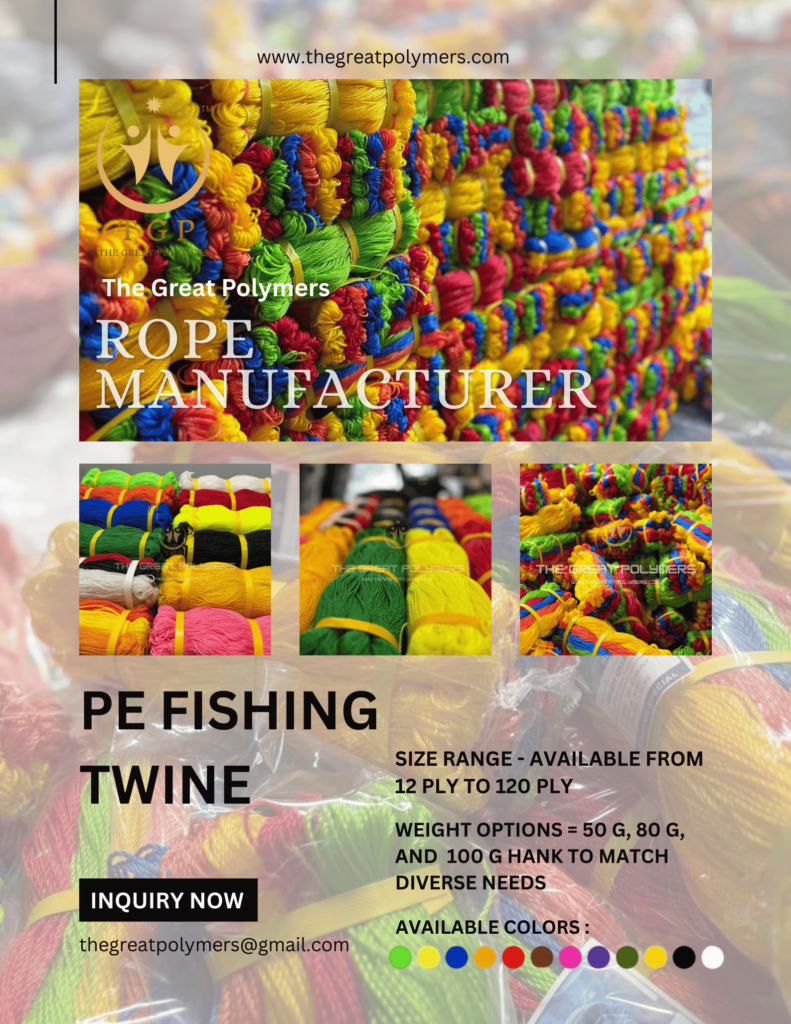
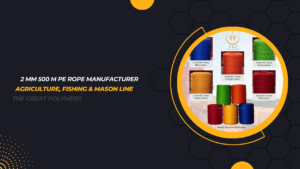
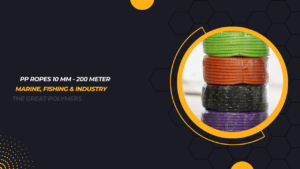
PE fishing twine is available in various colors such as:
- Green
- Blue
- White
- Black
Color choice may depend on:
- Water clarity
- Fish behavior
- Visibility requirements
For example, green twine blends well in coastal waters, while blue works effectively in deeper sea conditions.
7. Twisting & Construction Type
PE fishing twine comes in different constructions:
- Twisted (2-ply, 3-ply, multi-ply)
- Braided
Twisted twine is commonly used in fishing nets due to its balance of strength and flexibility. Braided twine offers higher strength and smoother surface finish.
Applications of High-Quality PE Fishing Twine
High-grade PE fishing twine is widely used in:
Commercial Fishing Nets
Large trawl and gill nets require strong and durable twine for heavy loads.
Aquaculture & Fish Farming
Used in cages, enclosures, and net barriers.
Net Repair & Maintenance
Reliable twine ensures long-lasting repairs.
Marine & Industrial Use
Also used for general marine tying, bundling, and light-duty applications.
Benefits of Choosing Premium PE Fishing Twine
- Lightweight yet strong
- High abrasion resistance
- Long service life
- Minimal water absorption
- Cost-effective in the long run
- Easy handling and knotting
When sourced from a reliable manufacturer, PE fishing twine delivers consistent quality and dependable performance.
How to Identify a Reliable PE Fishing Twine Supplier
When selecting a manufacturer or supplier, consider:
- Experience in rope and twine manufacturing
- Quality control standards
- Custom size and color availability
- Consistent supply capacity
- Export-quality packaging
Ask for product specifications and, if possible, test samples before placing bulk orders.
Storage & Maintenance Tips
Even high-quality PE fishing twine needs proper care:
- Store in a dry, shaded area
- Avoid prolonged exposure to direct sunlight when not in use
- Keep away from sharp objects
- Inspect regularly for wear and tear
Proper storage significantly extends product life.
Common Mistakes Buyers Should Avoid
- Choosing based only on price
- Ignoring tensile strength ratings
- Not checking UV resistance
- Using incorrect thickness for target fish
- Buying from unverified suppliers
Quality should always be the top priority.
Conclusion
Selecting high-quality PE fishing twine is a critical decision for commercial fishing operations, aquaculture farms, and marine industries. By focusing on tensile strength, UV resistance, durability, flexibility, and supplier reliability, you can ensure long-term performance and reduced operational costs.
A well-chosen PE fishing twine not only improves fishing efficiency but also enhances safety and profitability. Always invest in quality—because in marine environments, reliability is everything.
FAQs: Choosing High-Quality PE Fishing Twine
1. What is PE fishing twine used for?
PE fishing twine is primarily used for manufacturing and repairing fishing nets, aquaculture cages, and marine applications.
2. Is PE fishing twine waterproof?
Yes. Polyethylene material does not absorb water and is highly resistant to saltwater.
3. How do I choose the right thickness?
Select thickness based on fish size, net type, and environmental conditions. Heavier loads require thicker twine.
4. Does PE fishing twine resist UV rays?
High-quality PE twine is UV-stabilized, which protects it from sunlight damage.
5. What is the difference between twisted and braided twine?
Twisted twine is commonly used for nets due to flexibility and cost-effectiveness, while braided twine offers higher strength and smooth finish.
6. How long does PE fishing twine last?
With proper use and storage, high-quality PE twine can last several seasons, depending on environmental conditions.
7. Can PE fishing twine be used in aquaculture?
Yes, it is widely used in fish farming cages and enclosures.
8. Why is tensile strength important?
Tensile strength determines how much load the twine can handle before breaking, ensuring safety and durability.


Leave a reply